❋
Intake Diversion Pilot Program
Helping pets stay with the people who love them
Summary: Shelter Support Network (SSN) operated a 31-day Intake Diversion Pilot Program for Tulsa Animal Services (TAS) from July 1 through July 31, 2026. The pilot received eight referrals involving 12 animals. Every referral was successfully diverted from municipal shelter intake during the reporting period, producing a documented intake-aversion rate of 100%.
The results show that intake diversion is not a single-service program. Clients presented with medical needs, housing instability, physical limitations, food insecurity, unsafe containment, transportation barriers, and urgent surrender requests. Successful outcomes depended on rapid case assessment, flexible problem-solving, direct veterinary support, fundraising, transportation, resource navigation, donated services, and rescue placement.
SSN raised approximately $2,061 in community donations when the pilot was introduced, creating a flexible funding pool to address urgent barriers to pet retention. The program tracker recorded $699.36 in direct or committed costs across three cases. Five of the eight cases had no direct program cost recorded, demonstrating that coordination and partner leverage were often as important as cash assistance. In addition to these recorded expenses, the pilot leveraged an estimated $1,095 in donated services and at least $465 in community-raised funding, bringing the total documented and estimated value mobilized to approximately $2,159.36. Because several veterinary appointments and support plans extended into August, the pilot achieved immediate shelter diversion while also creating a continuing follow-up workload.
Pilot results
During the one-month pilot:
8 referrals were received
12 animals were affected
100% of referred cases were diverted from Tulsa Animal Services
11 animals remained with their owners or community caregivers
1 dog was transferred directly into rescue and foster care
$699.36 was recorded in direct or committed pilot expenses
When the program was introduced at the beginning of July, our community helped raise approximately $2,261 to establish a flexible assistance fund for intake-diversion cases.
The pilot also benefited from donated veterinary services, grooming, daycare, vaccinations, transportation, foster care, fundraising support and other assistance provided by community partners and volunteers.
What the program addressed
The pilot was designed to intervene before a pet entered Tulsa Animal Services, by addressing barriers that place pets at risk of entering the shelter. The pilot focuses on Supplies Assistance, Major Medical Assistance, Peer Support, and Housing Assistance. Program Eligibility: Owners considering surrender, willing to keep their pet if assistance is available, and whose circumstances fall within one or more intervention categories may be referred. TAS referred households whose stated barriers appeared potentially solvable through short-term assistance, partner coordination, or an alternative placement pathway. SSN then contacted each client, assessed the immediate risk of surrender, identified practical barriers, and coordinated an individualized response.
Community partnerships made this possible
The pilot depended on collaboration between Tulsa Animal Services, Shelter Support Network and local organizations willing to step in with specialized support. Seven of eight cases involved at least one named organizational partner, and the pilot engaged 9 external partners in addition to TAS. Partners contributed clinical care, vaccines, microchipping, daycare, food resources, containment assistance, spay/neuter access, social-media support, grooming, rescue intake, and foster placement.
Partners:
Tulsa Animal Services
Referred cases and provided vaccinations and microchipping in Martha’s case.
Humane Society of Tulsa
Scheduled medical, vaccination, deworming, and alteration services.
Cedarwood Veterinary Hospital
Provided veterinary evaluation and treatment for Squirt and Stormie.
Spay Oklahoma
Scheduled alteration services for Samantha’s three dogs.
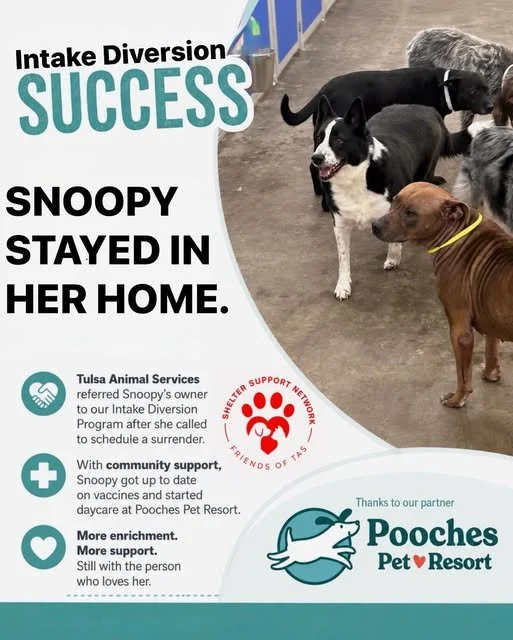
Pooches Pet Resort
Donated two daycare days per week for six weeks.
Oklahoma Pet Collective Society
Supported Maria’s fundraiser and offered temporary-placement assistance.
Oklahoma Alliance for Animals / UnChainOK
Provided food-pantry access and containment-assessment support.
Professional Pet Grooming by Emily
Provided urgent grooming for Radar after severe matting was identified.
Memphis Street Animal Rescue
Accepted Radar’s surrender and assumed rescue responsibility.
Shelter Support Network also provided transportation, case coordination, fundraising, follow-up and foster support. Notehouse was used as the program’s centralized case-management and recordkeeping system, allowing SSN to document referrals, client communication, appointments, expenses, partner involvement and case outcomes.
Radar’s transition to rescue
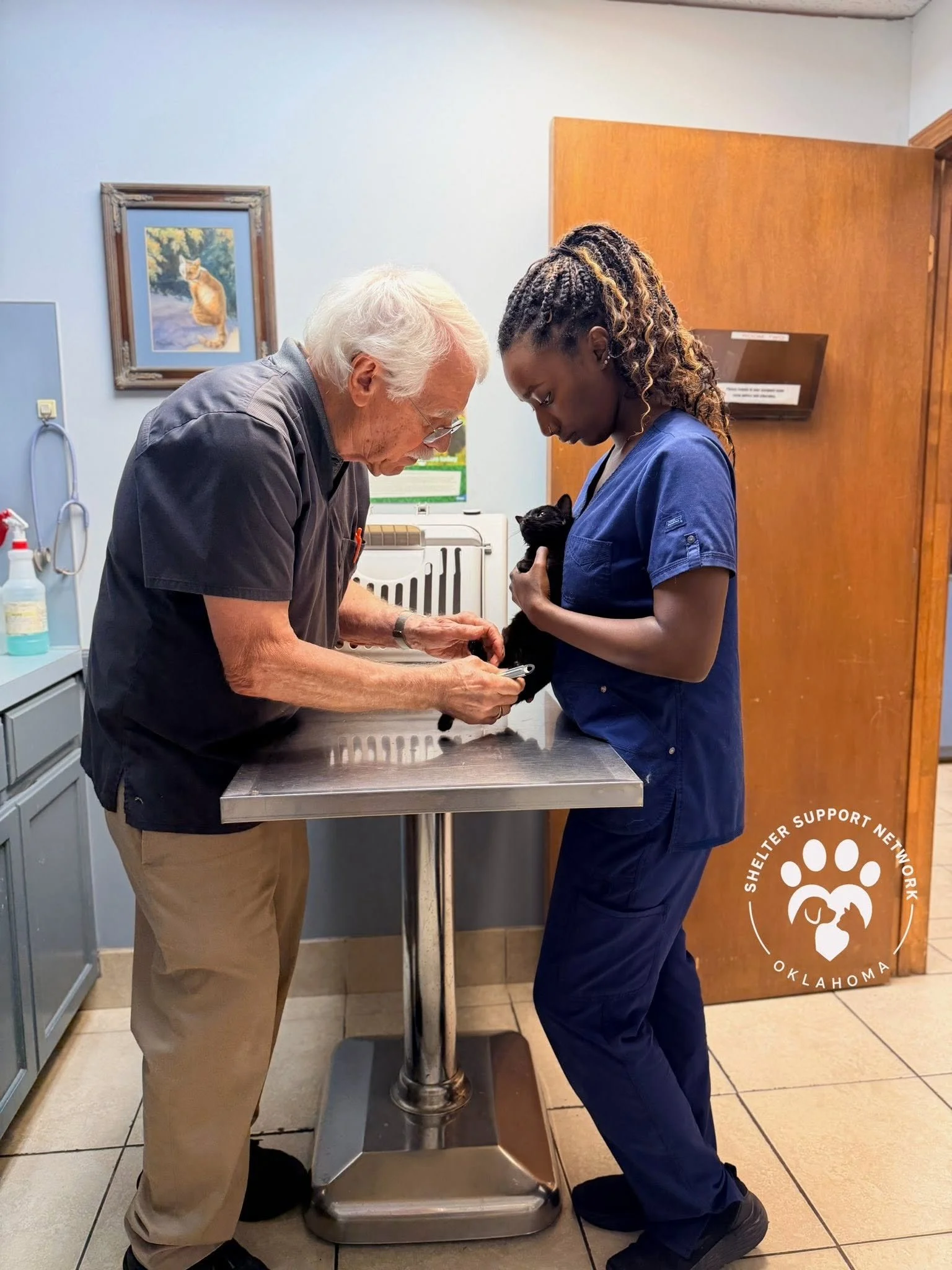
One referral involved Radar, a senior dog whose condition required immediate intervention, professional grooming, veterinary evaluation and rescue placement.
Shelter Support Network coordinated Radar’s removal from the home, secured placement with Memphis Street Animal Rescue and arranged initial foster care. SSN also donated $500 directly to Memphis Street Animal Rescue to assist with Radar’s ongoing expenses after transfer. Because this contribution supported his post-transfer care, it was tracked separately and was not included in the pilot’s direct program-cost total.
What we learned
· Rapid, individualized contact: SSN contacted clients directly and gathered enough information to determine whether the barrier was medical, financial, logistical, behavioral, or placement-related.
· Flexible definitions of diversion: The program prioritized keeping animals out of TAS, whether through owner retention, temporary support, or direct rescue transfer.
· Partner leverage: Donated and partner-provided services allowed SSN to resolve or stabilize most cases without a direct cash expense.
· Expansion beyond the original referral: When appropriate, SSN addressed household-level prevention needs, such as arranging alteration services for all three of Samantha’s dogs.
· Transportation support: Direct transport made urgent veterinary and rescue services possible for clients who lacked a vehicle.
· Practical, low-cost solutions: Daycare, food-pantry access, containment referrals, and management communication addressed root causes that a shelter intake process would not solve.
The impact
The July 2026 pilot provides strong early evidence that a community-based intake diversion program can prevent animals from entering Tulsa Animal Services by resolving the concrete barrier behind a surrender request. All eight referrals were diverted, 12 animals were affected, and the recorded direct or committed program cost was $699.36. In addition, the pilot leveraged an estimated $1,095 in donated and in-kind services and at least $465 in community-raised assistance, bringing the total documented and estimated value mobilized to approximately $2,159.36. This total does not include undocumented pet-deposit assistance or the value of staff and volunteer time. The majority of cases required no recorded cash expenditure because SSN used resource navigation, partner relationships, donated services, fundraising, transportation and alternative placement. The pilot was supported by approximately $2,261 raised from the community at its launch, demonstrating strong public support for solutions that help families retain their pets and prevent unnecessary shelter intake.
The pilot also shows that diversion is ongoing casework, not a one-time transaction. Seven cases extended beyond July, and several outcomes remained dependent on August appointments, transportation, housing progress or rescue medical care. A continued pilot should therefore pair flexible assistance with stronger follow-up, cost accounting, transportation procedures and staged outcome measurement. Continued use of Notehouse as the program’s centralized case management and recordkeeping platform will support consistent documentation, follow-up, accountability and future outcome reporting.
With those systems in place, SSN and TAS can use intake diversion not only to reduce shelter admissions, but also to preserve human-animal bonds, improve animal welfare, maximize the impact of community partnerships and direct limited shelter capacity toward animals who cannot safely remain in the community.